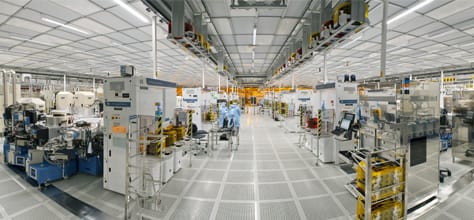
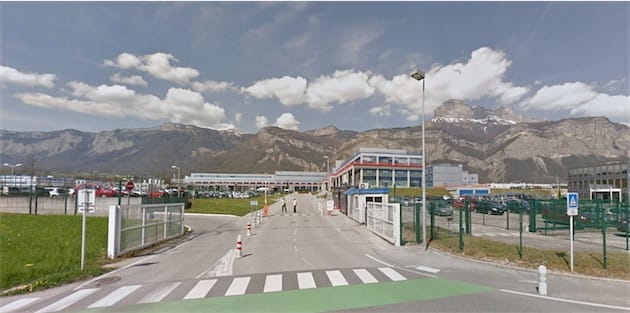
Technology research and product development of the all-Pu Optoelectronics began in 2009. Through a strategic partnership with the United States as the company Micro (Microvision LLC), the whole Pu Optoelectronics MEMS micro-laser display technology to further enhance the system. In 2011, a resolution of 600x480 of MEMS micro laser projection modules successfully developed; in 2013, the resolution of up to 960x640 and 1080x720. Currently resolution reached 1920x720, is the most competitive on the market today micro laser projection modules. At the same time, design and improvement of the optical module has an optical laboratories in Tokyo, Japan, in order to continuously optimize the volume of the laser beam spatial correlation, optical loss, and the production process of the optical system. Currently MEMS micro laser projection technology has been completed industrialization, successfully used in micro projectors and projection smart phone.
Full Pu Optoelectronics global partners are major well-known companies from the United States, Japan, Korea and Europe, including: Maxim (Maxim), a microscopic (Microvision), Texas Instruments (TI), Broadcom (Broadcom), Qualcomm (Qualcomm) Corning (Corning), Sony (Sony), Hitachi (HITACHI), SEI (Sumitomo), Sharp (Sharp); Samsung (Samsang), modern (Hyundai), LG (LG); Osram (OSRAM); STMicroelectronics semiconductor (ST), Leica (Leica), Zeiss (Zeiss), and the like.
MEMS micro laser projection technology Pu photoelectric whole structure has two main parts. First, the laser modules in the three primary colors red, green and blue (RGB) laser tube through the internal optical system produces a color intensity and highly variable spatial correlation of a single pixel of the laser beam to achieve without focusing projection. Second, the biaxial MEMS mirror single pixel laser beam is projected to the synchronous scan mode using the pixel array scanning micromirror motion image little by little "draw" on the projection screen.
Compared with the traditional projection equipment halide lamp, a laser is a very efficient source. Halide lamp only a small portion of the light energy (2% to 3%) were transformed into heat and the rest are wasted. And halide lamp is expensive, easy to wear and tear, brightness decay rapidly, too sensitive to shock. The mechanical part of the laser projection system is small, the laser beam can be deflected by the mirror system has good stability. Run time of up to more than one million hours.
Color and brightness of each pixel in the image signal modulated by the laser, can produce 16 million colors (24-bit true color) at each pixel. Arising out of this image with extremely bright colors. Opening the laser tube can be shut. Such a small power consumption and high image contrast. Traditional light projection display system is always in a state of continuous illumination. A dark pixels light depends on the spatial light modulator (Spatial Light Modulator - SLM) excess light refraction on or absorbed.Since the light source can not be closed, the light utilization rate, high power consumption. In addition, the conventional projection display system can not produce a full black image, so its poor image contrast.
Design single pixel optical system ensures a high degree of spatial correlation of the laser beam, so projected images are always out of focus, clear. In other words, the whole Pu photoelectric MEMS micro laser projection without focus. Whether vertical or inclined angle is projected onto a plane, or invested in any three-dimensional surface of the body, the image is clear, is anytime, anywhere projection technologies in the true sense. So far, the market for all projection equipment projection distance when the focus changes are needed to bring portable projector experience problems.
More than a simple optical mechanical design for electronic circuit design challenges. The complexity of the circuit designer to precisely control the display of pixel location and pixel rate accurately modulated laser. Many complex functions can be integrated electronic circuitry allows the projector to display the miniaturization of portable electronic consumer products possible.
In summary, MEMS micro laser projection technology simple structure, small size, light path loss (loss of about 3%), low power consumption, wide range of colors, contrast, high resolution, without focus.
The main components of MEMS laser projection technology has MEMS laser modules (including MEMS micromirrors and RGB micro laser tube and optics), MEMS drive circuit, a laser drive circuit, image processing control circuit, as shown below.

l MEMS micromirrors
MEMS micromirror is made of single-crystal silicon by microelectronic technology combined with other special process. Typical process steps include oxidation, photolithography, ion implantation, dry etching, wet etching, chemical vapor deposition, physical vapor deposition, plating, sputtering, bonding, high aspect ratio deep trench etching, laser scribing sheet and so on.
The reflecting surface of the micromirror is about one millimeter in diameter. Micromirrors micromirror arm connected with the frame, the arm micromirrors to micromirrors maximum angle as the rotational axis (horizontal projection angle) of 43 degrees. Frame by frame arm connected with the silicon substrate. Frame to frame arms as the rotation axis of the maximum angle (vertical projection angle) is 24 degrees.Quality micromirror system, mass distribution and stiffness of the axis of rotation determines the resonance frequency of the MEMS micromirrors, the final decision of the scanned image resolution.
Dimensional scanner chip size 4.65mm * 7.55mm. Entire MEMS chip and packaged together in a small magnet in the MEMS module. The magnetic field direction of the magnet provided with biaxial MEMS are a 45 angle. A single drive coil located on the frame, and accept a composite of two frequency drive signal to produce torque in a magnetic field, resulting in a two-dimensional rotating mirror. A sinusoidal signal at the same frequency as the resonance frequency of the MEMS mirror for driving horizontal scanning fast mirror, another frequency the same frame frequency sawtooth signal to drive slowly in the vertical scanning micromirror. Piezoresistive sensing mechanism to provide feedback signal (determine the position and motion of the micromirror) for the MEMS drive circuit.
MEMS micromirror advantage is that small size, light weight, stable performance, good repeatability, low power consumption.

l MEMS drive
MEMS driver circuit provides a drive signal for the MEMS coil under closed loop control. Resonant-frequency component signal comprising a MEMS (e.g., 27kHz) and a frame rate signal components (e.g., 60Hz). MEMS driver circuit adjusts the drive signal to maintain the amplitude balance micromirror MEMS resonant motion by receiving a feedback signal.
Two-dimensional image is generated by scanning the laser beam back and forth micromirrors generated. Transverse resonant frequency signal with a micromirror system drive mirror, power required is minimal. Two-way video image scanning reduces the blanking interval, maximize the efficiency of the laser. The case of the same laser output power, lumens projector will be increased.
Vertical scanning is usually a standard sawtooth waveform. Uniform scanning the image from top to bottom quickly returned after the end of each frame at the top and start again. This process is also carried out in order to maintain a smooth and linear trajectory under closed loop control. Sawtooth frequency is generally around 50-60Hz, at relatively low resolution can be improved.
l Micro Laser Module
Laser display technology is based on red, green and blue, the three primary colors (RGB) continuous wave visible laser light source for the display technology, the most realistic reproduction of the objective world rich, bright colors, providing even more shocking expression. The advantage of laser is wide color gamut space, colorful, color saturation, high contrast, so the laser show is called "the human visual history of the revolution", is the future of display areas of focus of competition.
Gamut refers to the range of a display device capable of displaying a color. Color gamut coverage is up to the percentage of the human eye can recognize color space. This percentage is as high as possible on the display device, the higher the explanation, the more the color of the display device. Color gamut of the laser light source is higher than 90%, while the LCD (LED) is 27 percent of the color gamut, plasma (PDP) is 32% of the color gamut.
Number is the number of colors that can be displayed in color. The more colors can display more complex images, the level of the screen is also more abundant. The highest was 16.77 million colors (24-bit true color). Color laser on 24-bit true color.
Color saturation represents color shades or brightness of light depends on the color of the white light content, the higher the content of white light, namely the lower content of colored light, color saturation that is lower. Its value as a percentage, between 0 - 100%. When this value is 0. time. Black and white ash is colorless color, when low color saturation, it will pale, pure color and light saturation was 100%. High color saturation of the laser.
Contrast is the ratio of the projors are more vivid ; contrast ratio is small, then let the entire screen is gray. Laser contrast up to 80ected image between the brightest and darkest areas between the larger the ratio, the more gradual change from black to white level, thus richer color performance, image more clearly visible, bright col,000: 1.
Laser wavelength selection based on two considerations. First, the human eye photopic response wavelength. This reaction is generally Gaussian shape, the peak wavelength in the green, slightly lower on the red and blue wavelengths. White light required for red, blue power changes with wavelength changes rapidly. For example, the red wavelength from 650nm changed to 635nm, the human eye photopic response doubled. So the red laser tube power can be reduced by half still achieve the same desired photopic response, making the system more low power consumption. Similarly, the frequency of blue laser tube should try to choose a longer wavelength. Currently on the market blue laser tube wavelength between 440-445nm. In the future we should consider selecting upcoming 460-470nm wavelength blue laser tube.
The second consideration is the color gamut. Because the photopic response to peak in the green wavelength, green wavelength selection in order to achieve the best color display prevail. Green 530nm is a good choice, can be optimized to maximize the color gamut.
Full Pu Optoelectronics a wavelength of 630 micrometers red laser, green wavelength of 530 micrometers wavelength laser tube and 450 microns blue laser tube. Laser tube power in milliwatts.
Three-color laser beams RGB micro laser tube emitted get 3% of the light energy (below thick arrow beam) as a light control system feedback signal through the prism system, so that the remaining 97% of the light energy transmitted or reflected to a three beams meet forming a red light or a beam of white light, or a bundle of green or blue glow. Three-color laser tubes and optics are packaged together in the laser module.

l Laser Driver
The ability to directly modulated laser is the core of the system design. Laser Driver with traditional CRT driver had a lot of differences. First, CRT scanning, the lateral line from the left to the right to begin scanning, and then quickly return to the left side of the next scan line. MEMS laser display system, the use of modern advanced electronic circuit technology, scans odd lines may be from left to right, you can even scan lines from right to left. Secondly, the required horizontal scanning line pixel position change timing is not the same. MEMS micromirror motion during start-up and steering should have plus (minus) speed, but due to the inertia of the mirror, but slow down the speed of the micromirrors in the two extremes, resulting in a constant pixel clock signal emitted at the endpoint accumulate in together. If not corrected, ends bright images become deformed. One solution is to produce a virtual set of pixels.In the middle of the scan mirror highest speed lines, each corresponding to a virtual video pixel clock. At both ends of the scan lines, every 3-5 virtual video clock period corresponds to one pixel. This allows scanning line pixel distribution.
High-speed laser control each pixel, we need to quickly open and close the circuit and pixel high-level interfaces, resources, and function blocks. Due to the high capacitive load of high inductance laser, switch off the laser pixels have some challenges. By Maxim's unique pixel close US assistance function block, the pixels falling scooter 1ns. In addition, a three-channel DAC running at 250MHz to ensure high-definition video resolution.
LCD, DLP rear projection technology and other backlit at night because of leaks to produce shadows and ghost images. MEMS micro-laser display does not have a similar problem, because it is before the light irradiation technology. The laser beam is a pixel of a pixel coupled to the laser tube is not one hundred percent open most of the image is displayed. All black image laser tube can be completely shut down, power consumption is only 80mW. MAX3601 multiplication DAC can be safely and reliably from one lumen light intensity modulation of the night to 30 lumens bright sunlight.
Color laser subject to continuous monitoring to ensure color consistency at various temperatures, and ensure the safety of the laser conditions. Also used the color sensor to compensate the brightness in daylight, shadow, night-time conditions.
l Image Processing
The video processor can accept RGB or YUV input. Use video buffer allows no dummy scan converted video input. Gamma correction and color space conversion of the input color application accurately mapped onto a wide color gamut laser. Scaling engine for converting low-resolution video content.
A unique virtual pixel composition (Virtual Pixel Synthesis, VPS) interpolation engine uses a high-resolution input pixel is mapped onto a sinusoidal horizontal trajectory. VPS is a complex electronic circuit functions replace the optical function best display. It is very effective input pixel mapped to the virtual coordinate grid resolution. In addition to the high pixel precision targeting video information to the sine sweep, VPS engine can optimize the image quality. VPS engine control by adjusting the overall brightness of the display in Figure coefficient to achieve luminance uniformity.
Optical distortion, including trapezoid, parallelogram, and certain types of pincushion distortion can be used to adjust the engine VPS pixel position to compensate. VPS engine also allows independent adjustment of each color pixel location. Even if the laser module assembly process of the three primary colors of the laser beam is not completely aligned, red, green and blue pixel position can be adjusted independently through the circuit so that the video image is perfectly aligned. This feature can also be used to modify MEMS laser display in a large optical system chromatic aberration.
Digital video to the laser drive mapping by an adaptive laser driver (Adaptive Laser Driver, ALD) to complete. ALD is a use of the optical feedback from the laser active laser characteristics with temperature compensation and aging of the closed-loop system.This ensures optimal brightness, color and grayscale display performance.
l MEMS laser modules
And laser modules and MEMS micromirror modules formed by the size of MEMS laser modules with one yuan fairly. Thickness of 6.2mm, weighing only 10g.

Full Pu Optoelectronics existing three products: laser intelligent controller, micro projector, and MEMS laser projector phone.
Laser Intelligent controller is a virtual keyboard line flying squirrel, 3D motion capture, portable laser pointer 4 in 1 is a plug and play mini-receiver, compatible with USB1.1 and USB2.0; laser controller stylish , flying squirrel keyboard + laser, lasts two hours; more moderate weight feeling, playing somatosensory game; strong sense of design, smooth body lines. Hand laser mouse with fashion technology.

Mini Projector is a private theater in your pocket. Using the latest MEMS micro laser projection technology, this small size portable projector makes big screen anytime, anywhere a reality show. This mini projector support 1080 HD quality; 40 lumens of brightness; the operation can be unplugged for 3-4 hours, coupled with mobile power supply to the operating day; light source life 20,000 hours; laser imaging, no focus, contrast ratio 80,000: 1 . The best projection distance 0.3m-3m, Projection Size: 10-200 inches; 11.5mm thin body; comes with Android version 4.4.2, built-in memory 32G, Bluetooth 4.0, WIFI2.5G / 5G (support WIFI hotspot, WIFI display), speaker power 1W.
Mini projector a mechanism Pa: Office projection, home theater, outdoor commercial speech, the three scenes!

The latest production of MEMS laser projector phone is phone + room + playroom playroom + + + Home Cinema Hall. The laser projector phone will MEMS micro laser projection technology with the Android mobile phone system perfect combination, carrying a number of patented technologies and full Poor's inventions, a new generation of trendy projector phone.
Machine size is only 148 × 70 × 11mm. Phone has pixels high, low power consumption, powerful, simple structure, wide range of colors, the machine uses the best display with a resolution up to 1080P, its color reproduction of 95 percent, compared with other products, color high reduction of more than 25% of similar products, so that a higher resolution phone screen more clearly. Meanwhile, the phone is a camera phone, the front camera of 500 million pixels, rear amounted to 13 million pixels.
Projection section, using the world's most advanced MEMS micro-laser technology.Brightness: 35 lumens, contrast ratio: 80,000: 1, Resolution: 1920 x 720, projection size: 200 inches (depending on environment); projection size ratio: 16: 9; laser imaging without focus; projectable file formats: Office document (ppt, pdf, Word, Excel), video (mp4,3gp, mov, mkv, avi, flv, mpeg), pictures (jpg, bmp, gif, png).

MEMS micro laser projection technology high efficiency photovoltaic whole Cape, small size, long life, high reliability and wide range of image color, contrast, high resolution, without focus, has a very broad application prospects. Here is the full S & P is developing photovoltaic products and the near future products, technical solutions Conception.
1. Ultra-wide-angle projection
The MEMS laser projection technology with the traditional set-top box or set-top box terminal cloud combined with an advanced optical system for MEMS laser projection out image correction, to achieve ultra-wide angle / short distance projection effects. Since the projection distance is short, the projected image will be greatly enhanced lumen.Plus colorful graphics, clear picture quality, high color saturation, high contrast, high resolution, this application can replace the current large-screen TV market. No expensive display, as long as the set-top box and a white wall, and more preferably configured Bluetooth speakers, digital TV, video on demand, time-shifted back to see, interactive games, home theater, home e-commerce readily available.

2. Pocket PC
Configure powerful CPU, reforming existing virtual keyboard technology combined with MEMS laser projection technology mobile phone, a pocket PC was born. It is a portable computer and a mobile phone, it is a projector. PC base is both a charger stand, a table and a long white wall, anytime, anywhere office, shareable, demonstrating, can games, film and television. Small size, easy to carry, for business entertainment essential goods.

3. Smart Glasses
This is a seemingly ordinary glasses. It may be glasses, reading glasses may be adjustable at any time. Equipped like a mobile phone independent operating system on the frame, by the user to install the software, games and other programs, to be completed by adding the schedule by voice or motion control, map navigation, interact with friends, take photos and video, video calls and other functions, mobile communications networks to achieve wireless network access. Display and virtual worlds is the perfect combination of electronic products.

4. Smart bracelet
Wearable Smart hand ring sleep, heart rate, blood pressure, respiratory rate, skin humidity / temperature, exercise, calorie monitoring, health warning, and the surrounding environment, such as atmospheric pressure, humidity / temperature reporting is not only the needs of modern healthy living, and more understand themselves, challenge themselves, symbol of the pursuit of happiness.
Built MEMS laser projection function smart bracelet allows you to watch anytime, anywhere their own parameters signs, no smartphone, no need to download APP. Built-in camera can capture gestures let you easily operate the smart bracelet system.

5. Virtual projection (Cinema)
To make people naked eye 3D immersive virtual reality viewing sense, there must be a sufficient number of video channels. In accordance with the existing computer digital processing technology, multi-channel video signal acquisition and preservation is not difficult (in one or more image files). The key lies in the numerous affect the signal reduction is displayed in order to achieve a similar effect with the shooting.
The use of advanced MEMS laser projection display technology, allowing multiple projectors in a multi-directional projector and a computer image processing system, resulting in different projection images at different locations, to create a fantasy dynamic interactive experience, allowing you to enter the integration of the actual situation, Living wonderful world.

6. Outdoor billboard
In modern society, the rapid development of science and technology, outdoor advertising also cited a number of new materials, new technology, new equipment and become a work of art to beautify the city, it is one of the city's economic development level mark. Top advertising creative, excellent location, large size is regarded as a classic advertising critical to the success of outdoor advertising.
Currently, there are three large billboards. First, high-speed fixed static roadside billboards, mainly in the spotlight for lighting equipment. Screen advertising production installation required manpower and financial resources. Once the ad content and be a good time to show the same ads 24 hours remain unchanged, a small amount of information, advertising efficiency is poor. Second, the large LCD screen on the external walls of many commercial buildings. Informative, dynamic sense, but the pre-entity large display considerable investment. The third is the outdoor advertising means more expensive three sides. This device has three prism, screen advertising content using inkjet, computer pictures, or outdoor color cards and other materials. When these rotating prism, it can be composed of three different advertising images.
MEMS laser all-Pu Optoelectronics invention display billboard entity without the LCD screen, as long as the white wall "wall." Projector mounted on the top center of the billboard, mouth downward projection, the overall water. It can be a positive vote, can rear. Wireless connection, easy replacement advertising content. Different times, different ads, informative, and can be targeted. Screen high-definition, wide viewing area, dynamic and strong. Reduce environmental pollution caused by large-scale inkjet, make life more secure environment.

7. Laser lights
Full Cape Photoelectric laser modules can be used in the latest generation of lighting equipment. Laser light source lamp is a natural, low-glare lighting and low light pollution source. Color laser light source lamp is easy to achieve balance. The form and direction of the projected light beam emitted from the laser light can also be adjusted according to different conditions and requirements to provide different illumination and lighting applications to further improve in different conditions.
For example, when road lighting will produce light pollution impact on nearby residents, the laser light is yellow can be adjusted to reduce light pollution. Another example is when the festival of colors and light intensity of the laser light can be adjusted to changes in the expression of the festive atmosphere. Another example is emergency, laser can emit a specific color and flash mode to alert. The controller can be based on the clock signal for controlling the laser light on and off time, for example, turn on laser light at 19 o'clock, 6 o'clock in the morning and turn off the laser light.
Since the energy of the laser power supply, low power consumption, a small solar panel and / or a micro-wind power generation apparatus is equipped with a battery to provide uninterrupted power to the laser lights. This feature not only energy, but also without remote power and control wiring, there is provided a lighting Province construction and operation of facilities in remote areas of time and material, labor, energy-efficient solutions. Moreover, the laser light source reliable and durable, can further reduce operation and maintenance costs. Operational procedures with storage and wireless communication devices, laser lights can achieve wireless control system.

8. Laser headlights
Compared with conventional light sources (tungsten, halogen lamps, HID lamps, LED lamps), laser lights that converts electrical energy into light energy efficiency improved significantly. In addition, since the laser with high temporal and spatial correlation, before using the laser lights can reduce glare. Glare is the interference of a main cause of the driver's vision, it is a major security risk nighttime driving.Laser headlights in a variety of environments using reliable and durable and have a longer service life.
Full Cape Photoelectric laser modules can be made of laser headlights car controller issued the beam color and intensity. The irradiation direction of the laser lights may be in response to the car controller command signal (low light, high light, turn) change.
For example, usually produces a more intense clearer reflection when a dark object is irradiated with blue light. When driving at night, then adjust the headlights to produce laser light source modules having more blue light combination of a laser beam.On the other hand, when driving at night, a major safety hazard is the glare of oncoming headlights of vehicles produced. Due to the smaller yellow glare when driving close to the oncoming traffic, keeping ahead in the same direction of the vehicle, or when there is fog, car headlights then adjust the laser light source module to produce more red light and green light so that the combination of the laser beam is yellow. Some special vehicles, such as police cars, ambulances, fire engines, road maintenance vehicles, emergency vehicles, ice cream sale of vehicles, often using a special color light or flash alert other vehicles in the vicinity or unnoticed.
Full Cape Optoelectronics Technology (Shanghai) Co., Ltd. in good faith, innovation, mutual win core values, hope that the new and old partners for a better future.