Those of us who have been watching have a benefit now, the media isn't yet reporting where Hololens' laser scanning display is coming from.
Things will get very interesting if the tech reporters put pieces together, and then also see us at MWC with STM and Lidar and in the Blackview Phone.
Then they'll dig a little and see interactive display...
Things could start getting REALLY interesting....
I'd REALLY like to see this and will travel to do so... if anyone can get me hands on with one, I'm there...(Alaska Airlines?)
Clearly with Epic Games participating with Hololens, this will not be an enterprise only kind of device. I believe they were included on purpose to make that case clearly.
*****
Business Insider
Epic, the creator of "Fortnite," has thrown around its considerable weight to put pressure on Apple and Google, and the 30% cut that they take from most app transactions. Now, Epic is pledging long-term support for HoloLens, citing this policy of openness as a reason why.
But in a blink-and-you-miss-it moment that may have gone overlooked, chief HoloLens inventor Alex Kipman made another, related announcement that has much larger implications for the industry: Microsoft committed to allowing anybody to operate their own app store for the HoloLens or any Windows-powered headsets like it.
It's a commitment that comes among a broad discussion about the economics of smartphone app stores. Apple, in particular, has come under scrutiny for requiring developers to fork over 30% of most App Store transactions, while also disallowing competitors to open their own alternative iOS app storefronts.
*****
I also very much liked their emphasis on freedom. (not going to lock you in to Microsoft browser, etc. That developers will be able to sell without being funneled through Microsoft store first.
I also love that it's for people who DO stuff -- it helps people do things. Not for sitting at a desk working on a computer, it's for taking that kind of information with you when you go out to work with your hands.
The applications I think that can take Hololens mainstream quickly is using it to teach processes. (like the person installing truck interiors during the presentation.) If that becomes as seamless as I think it will be, it will be able to immensely improve human performance, and pay for itself very quickly.
And at 1:10 they start talking about the new display at the Verge... wonder when they'll figure out the connection.
"No competition for the next two years that can come close to this level of fidelity."

Showing posts with label STMicroelectronics. Show all posts
Showing posts with label STMicroelectronics. Show all posts
Monday, February 25, 2019

Thursday, April 20, 2017
Slides from STM Presentation
Microvision was very well represented in this presentation, and it was a good engineering talk about how mems work --- and also about why they want to work with Microvision.
You can see in the presentation, each of the other two companies gets 1 slide, Microvision gets a series.
I've cut a couple out for your viewing pleasure.
STM Mems Presentation


You can see in the presentation, each of the other two companies gets 1 slide, Microvision gets a series.
I've cut a couple out for your viewing pleasure.
STM Mems Presentation


Sunday, April 9, 2017
Mems Journal Article
A good article in Mems Journal, featuring Microvision's Hokanen.
The best summary of why PicoP is superior is in the highlighted paragraph.
Thanks for the heads-up, Joe.
Mems Journal -- there is a lot more at the source.

Jari Honkanen: Our HUD technology architecture consists of red, green, and blue laser diodes, each with a lens near the laser output that collects the light from the laser. The light from the three lasers is combined with basics optics into a single beam. The intensity of each laser light source is varied to create a complete palette of colors and shades. The beam is then relayed onto a biaxial MEMS scanning mirror that scans the beam in a raster pattern. The projected image is created by modulating the three lasers synchronously with the position of the scanned beam. In the HUD application, specialized relay optics direct the beam of light from the scanning engine, making a virtual image viewable within the driver’s forward-looking field of view.
The main differences between MEMS laser beam scanning HUD, and HUDs based on panel displays: are 1) laser light sources produce brilliant colors and a wide color gamut, which helps the HUD see-through information stand out from background scenes, 2) MEMS LBS HUDs are high-contrast, meaning the lasers are completely off for pixels in the off state. This produces the best see-through display with no background glow, 3) the lasers are directly modulated pixel-by-pixel so light is only produced when needed. For panel-based displays, light sources are always on, even for black pixels, which makes them less power efficient, 4) panel based displays require more complex optical designs, which increases size and can reduce reliability, and 5) laser light, due to its coherence and polarization, is collected and relayed through the optical system with lower losses.
****
Competing LIDAR technologies are mechanical scanning LIDAR, non-scanning flash LIDAR, and phase array LIDAR.
When it comes to performance, we believe that our MEMS Scanning LIDAR offers significant benefits, including small size (a thin scanning engine at 6mm width enables new class of form factors), high resolution (we have prototypes that are capturing 5.5M points per second), dynamic (MEMS scanning allows programmable resolution and frame rate. The same sensor can perform either very fast lower resolution scan or slower high resolution scan, depending on the application and driving situation), and low persistence (scanned laser system enables blur-free capture of moving objects).
The best summary of why PicoP is superior is in the highlighted paragraph.
Thanks for the heads-up, Joe.
Mems Journal -- there is a lot more at the source.

Jari Honkanen: Our HUD technology architecture consists of red, green, and blue laser diodes, each with a lens near the laser output that collects the light from the laser. The light from the three lasers is combined with basics optics into a single beam. The intensity of each laser light source is varied to create a complete palette of colors and shades. The beam is then relayed onto a biaxial MEMS scanning mirror that scans the beam in a raster pattern. The projected image is created by modulating the three lasers synchronously with the position of the scanned beam. In the HUD application, specialized relay optics direct the beam of light from the scanning engine, making a virtual image viewable within the driver’s forward-looking field of view.
The main differences between MEMS laser beam scanning HUD, and HUDs based on panel displays: are 1) laser light sources produce brilliant colors and a wide color gamut, which helps the HUD see-through information stand out from background scenes, 2) MEMS LBS HUDs are high-contrast, meaning the lasers are completely off for pixels in the off state. This produces the best see-through display with no background glow, 3) the lasers are directly modulated pixel-by-pixel so light is only produced when needed. For panel-based displays, light sources are always on, even for black pixels, which makes them less power efficient, 4) panel based displays require more complex optical designs, which increases size and can reduce reliability, and 5) laser light, due to its coherence and polarization, is collected and relayed through the optical system with lower losses.
Competing LIDAR technologies are mechanical scanning LIDAR, non-scanning flash LIDAR, and phase array LIDAR.
When it comes to performance, we believe that our MEMS Scanning LIDAR offers significant benefits, including small size (a thin scanning engine at 6mm width enables new class of form factors), high resolution (we have prototypes that are capturing 5.5M points per second), dynamic (MEMS scanning allows programmable resolution and frame rate. The same sensor can perform either very fast lower resolution scan or slower high resolution scan, depending on the application and driving situation), and low persistence (scanned laser system enables blur-free capture of moving objects).
Saturday, April 8, 2017
Nice mention on Nasdaq Site
This also confirms that pretty much no one knows about Microvision yet. (if they have to describe a pico projector this way, the word isn't out yet.)
Thanks Dave.
STM Stealthy Giant
On the consumer side, you have companies like Nintendo Co., Ltd (ADR) (OTCMKTS: NTDOY ) that are using its motion sensors and touch screen integrated circuits in its new Switch console/handheld hybrid. On the industry side, you have cutting edge firms like Microvision, Inc. (NASDAQ: MVIS ) partnering with STM to develop laser beam scanning technology to enhance products for augmented and virtual reality, as well as pico projectors (tiny digital projectors that can fit in your hand).
These are just a couple typical deals that STM has been in engaged in for decades. But the compelling thing about STM now is, the tech it has been building and perfecting, it's time has come.
The other significant advantage STM has in this sector is its size. Now that companies are investing in this kind of transformative tech, they need a proven supplier that can deliver large quantities of high quality products.
And STM can deliver both.
Read more: http://investorplace.com/2017/04/stmicroelectronics-nv-adr-stm-stock-is-a-stealthy-giant/#ixzz4des5hBEp
Read more: http://investorplace.com/2017/04/stmicroelectronics-nv-adr-stm-stock-is-a-stealthy-giant/#ixzz4derxvt6W
Thanks Dave.
STM Stealthy Giant
On the consumer side, you have companies like Nintendo Co., Ltd (ADR) (OTCMKTS: NTDOY ) that are using its motion sensors and touch screen integrated circuits in its new Switch console/handheld hybrid. On the industry side, you have cutting edge firms like Microvision, Inc. (NASDAQ: MVIS ) partnering with STM to develop laser beam scanning technology to enhance products for augmented and virtual reality, as well as pico projectors (tiny digital projectors that can fit in your hand).
These are just a couple typical deals that STM has been in engaged in for decades. But the compelling thing about STM now is, the tech it has been building and perfecting, it's time has come.
The other significant advantage STM has in this sector is its size. Now that companies are investing in this kind of transformative tech, they need a proven supplier that can deliver large quantities of high quality products.
And STM can deliver both.
Read more: http://investorplace.com/2017/04/stmicroelectronics-nv-adr-stm-stock-is-a-stealthy-giant/#ixzz4des5hBEp
Read more: http://investorplace.com/2017/04/stmicroelectronics-nv-adr-stm-stock-is-a-stealthy-giant/#ixzz4derxvt6W
Thursday, March 9, 2017
Apple places order with STM?
Apparently Apple has placed an order for 3D imagers at STM.
Who wants a 3d imager in their phone that is only a 3D imager?
To me, 90% of this is still rumor. Apple tries mightily to maintain secrecy. I've theorized recently that they have started using distraction instead of stealth because they already leak too much. The most reliable "analyst" of Apple recently got their quarter completely wrong. It's still a really interesting rumor.
To me, 90% of this is still rumor. Apple tries mightily to maintain secrecy. I've theorized recently that they have started using distraction instead of stealth because they already leak too much. The most reliable "analyst" of Apple recently got their quarter completely wrong. It's still a really interesting rumor.
Thanks Walt for finding this one and sending it to me.
Igeneration
Apple has placed an important order for 3D imagers at STMicroelectronics, a source close to the file, Thus confirming information previously revealed by Challenges . Apple and STMicroelectronics had opened a joint lab dedicated to image sensors in Grenoble around 2015.
The fruit of this collaboration is now on track for production at the Crolles plant, near Grenoble. It is about 3D imagers intended for a future iPhone, our source told us.
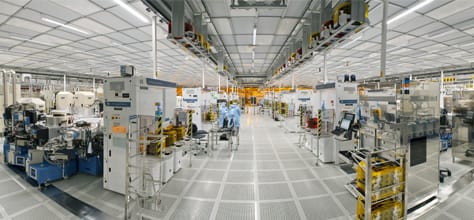
In its latest financial report , the French-Italian semiconductor manufacturer (which is part of Apple's usual suppliers) says it plans to invest about $ 1 billion in 2017, almost double the previous year. this investmentWill boost its production capacity and stimulate growth, "in particular with new products and technologiesSpecialists " .
The CEO of STMicroelectronics, Carlo Bozotti, even mentions "a contract recently taken [which will lead to] substantial revenues expected in the second half of 2017." Of course, Apple is not mentioned by name, but it is indeed Of the famous customer, according to our information.
A consultant from Yole Développement explained to L'Usine Nouvelle the nature of the components that will be supplied: "[The agreement] concerns the provision of laser time imagers, key components for the detection of proximity but also For the construction of 3D cameras. "
Several rumors of 3D cameras have emerged lately . The predicted uses range from facial recognition (to replace Touch ID or complement) to the augmented reality regularly vaunted by Tim Cook . Multiple acquisitions of start-ups and patents corroborate these rumors.
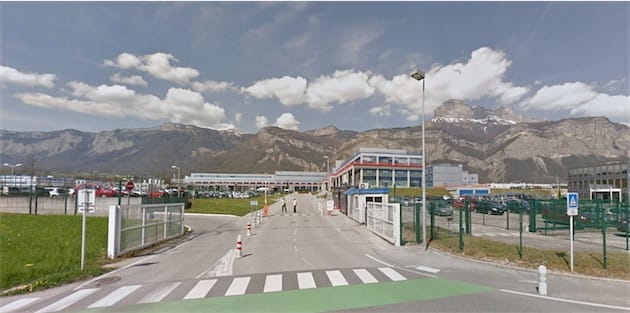
3D imagers provided by STMicroelectronics should only be equipped with the highest- end iPhone 2017, Plausibly named iPhone Edition . These components may not be readyFor September, the month when the new iPhone is traditionally launched, our source told us. This goes in the direction of the latest information of Macotakara according to which the marketing could be later than for the iPhone 7s and 7s More assumed.
d
Saturday, July 16, 2016
Tech Radar: Apple & ST Microelectronics
Generally I don't like to talk about the fruit company, but this can't be ignored.
Connect this information with this blog post, and things get interesting.
Based on previous leaks, we know STM is working with Microvision (and is no longer on Microvision's list of competitors.)
From TechRadar (more at the source) & BGR
Found and posted on Reddit
Rumors suggest Apple is now making a research lab in France dedicated to the iPhone camera sensor, but it may be the team is focused on a revolutionary feature for the iPhone shooter.
French newspaper Le Dauphiné Libéré shared details of the a new lab in Grenoble, France that will employ 30 engineers on an 800 square meter site.
Apple is rumored to be working in collaboration with engineers from STMicroelectronics, who produce the gyroscope and accelerometer used inside the Apple Watch.
That company also produced the pico projector for the Lenovo Smart Case smartphone - could this be what Apple is interested in?
Future projections
The Lenovo Smart Cast concept phone used projector technology to offer up a full gesture support on any surface, meaning you could put a keyboard down on your kitchen table and type on it.
Apple patents in the past have suggested the company is keen to look into projection camera tech in its phones.
Apple may have set up the separate research lab to improve the camera sensor for traditional camera work, but considering the French lab is so far away from Apple's normal operations it could be for a specific reason.
An iPhone with a projector built in could be an interesting step for the iPhone 7S.
Being able to project your apps directly onto any surface in your home would certainly offer up an innovative reason to upgrade your iPhone.
Connect this information with this blog post, and things get interesting.
Based on previous leaks, we know STM is working with Microvision (and is no longer on Microvision's list of competitors.)
From TechRadar (more at the source) & BGR
Found and posted on Reddit
Rumors suggest Apple is now making a research lab in France dedicated to the iPhone camera sensor, but it may be the team is focused on a revolutionary feature for the iPhone shooter.
French newspaper Le Dauphiné Libéré shared details of the a new lab in Grenoble, France that will employ 30 engineers on an 800 square meter site.
Apple is rumored to be working in collaboration with engineers from STMicroelectronics, who produce the gyroscope and accelerometer used inside the Apple Watch.
That company also produced the pico projector for the Lenovo Smart Case smartphone - could this be what Apple is interested in?
Future projections
The Lenovo Smart Cast concept phone used projector technology to offer up a full gesture support on any surface, meaning you could put a keyboard down on your kitchen table and type on it.
Apple patents in the past have suggested the company is keen to look into projection camera tech in its phones.
Apple may have set up the separate research lab to improve the camera sensor for traditional camera work, but considering the French lab is so far away from Apple's normal operations it could be for a specific reason.
An iPhone with a projector built in could be an interesting step for the iPhone 7S.
Being able to project your apps directly onto any surface in your home would certainly offer up an innovative reason to upgrade your iPhone.
Friday, December 4, 2015
Chipworks - MPCL1 Breakdown and analysis
A great article at Chipworks. I Highly recommend looking at the source. There is much more there.
They clearly haven't come to their conclusion that STM is involved in the manufacturing of this from rumors. They've looked at it.
Evidence that MicroVision has good, powerful partners.
From Chipworks <<-- go to the source.
The unit has a 16x9, 1920x720 display, with a claimed contrast ratio of 80,000:1 and a full colour palette, generated with a laser light source capable of cranking out 32 lumens (good for a 40-inch display in a darkened room). Connection is by HDMI and USB ports and WiFi (IEEE 802.11 a/b/g/n), and it retails for $350 US on Amazon and elsewhere.
They have a technology they call PicoP® Display, which uses laser beam scanning (LBS); red, blue and green lasers combine to give the full range of colours, and a patented MEMS scanner crates the image. Other pico-projectors using the LBS engine include the Celluon Pico-Pro and the Sharp RoBoHon phone.

Which is where STMicroelectronics come in – they clearly make the MEMS die for the Microvision module. This is the second time recently that we’ve seen ST micromirrors in products, we blogged about the Intel RealSense camera back in July. This one is different, though, the RealSense MEMS is an electrostatic scanning mirror that only scans in one direction, whereas the Microvision device is a dual-axis electromagnetic scanning mirror.
They clearly haven't come to their conclusion that STM is involved in the manufacturing of this from rumors. They've looked at it.
Evidence that MicroVision has good, powerful partners.
From Chipworks <<-- go to the source.
The unit has a 16x9, 1920x720 display, with a claimed contrast ratio of 80,000:1 and a full colour palette, generated with a laser light source capable of cranking out 32 lumens (good for a 40-inch display in a darkened room). Connection is by HDMI and USB ports and WiFi (IEEE 802.11 a/b/g/n), and it retails for $350 US on Amazon and elsewhere.
They have a technology they call PicoP® Display, which uses laser beam scanning (LBS); red, blue and green lasers combine to give the full range of colours, and a patented MEMS scanner crates the image. Other pico-projectors using the LBS engine include the Celluon Pico-Pro and the Sharp RoBoHon phone.

Which is where STMicroelectronics come in – they clearly make the MEMS die for the Microvision module. This is the second time recently that we’ve seen ST micromirrors in products, we blogged about the Intel RealSense camera back in July. This one is different, though, the RealSense MEMS is an electrostatic scanning mirror that only scans in one direction, whereas the Microvision device is a dual-axis electromagnetic scanning mirror.
Thursday, November 26, 2015
EETimes: ST Microelectronics
There's more here than simply confirming that STMicroelectronics is working with Sony and MicroVision. Check out the article at the source.
Something that's long been suspected has been confirmed.
This makes us more confident that the Lenovo Smartcast Will be using PicoP. I'll be watching.
EETimes
 A 2012 strategy to expand ST's MEMS offering into applications and market sectors that would complement success in smartphones is starting to pay off, according to Benedetto Vigna, general manager of the analog, MEMS and sensors group at STMicroelectronics.
Sandro Dalle Feste, product development manager in ST'S AMS group explained that micro-mirror driving can be done electrostatically or electromagnetically. In essence the first uses high voltages and low currents while the second has low voltages and high currents. In the interests of energy saving the former is preferable.
"And ST is also in production for MicroVision and Sony in the MPCL1 laser picoprojector, although this requires either two mirrors or a double axis mirror. The advantage of a laser-based "flying spot" system is that the image does not need to be focused – saving weight and energy – and "keystone" correction can yield a rectangular image on most flat surfaces. And ST provides the processor to perform the image correction."
Picoprojectors do have challenges. It is hard for them to be bright enough while staying within the "eye-safe" laser category and while being sufficiently low power for mobile and battery-operated applications. However, Vigna points out that optical MEMS can be used for many as yet undeveloped applications; for beam-steering of automobile headlights, for polymer curing in 3D printing.
ST's optical MEMS program is not quite at the same state of readiness as the inertial MEMS platform where ST introduced has standardized process platforms such as THELMA, says Vigna. "It's more, engage with the right partners and then let the market take off," he said.
Something that's long been suspected has been confirmed.
This makes us more confident that the Lenovo Smartcast Will be using PicoP. I'll be watching.
EETimes
A 2012 strategy to expand ST's MEMS offering into applications and market sectors that would complement success in smartphones is starting to pay off, according to Benedetto Vigna, general manager of the analog, MEMS and sensors group at STMicroelectronics.Sandro Dalle Feste, product development manager in ST'S AMS group explained that micro-mirror driving can be done electrostatically or electromagnetically. In essence the first uses high voltages and low currents while the second has low voltages and high currents. In the interests of energy saving the former is preferable.
"And ST is also in production for MicroVision and Sony in the MPCL1 laser picoprojector, although this requires either two mirrors or a double axis mirror. The advantage of a laser-based "flying spot" system is that the image does not need to be focused – saving weight and energy – and "keystone" correction can yield a rectangular image on most flat surfaces. And ST provides the processor to perform the image correction."
Picoprojectors do have challenges. It is hard for them to be bright enough while staying within the "eye-safe" laser category and while being sufficiently low power for mobile and battery-operated applications. However, Vigna points out that optical MEMS can be used for many as yet undeveloped applications; for beam-steering of automobile headlights, for polymer curing in 3D printing.
ST's optical MEMS program is not quite at the same state of readiness as the inertial MEMS platform where ST introduced has standardized process platforms such as THELMA, says Vigna. "It's more, engage with the right partners and then let the market take off," he said.
Subscribe to:
Posts (Atom)